Pregnancy care & prenatal diagnostics in Hamburg
Your specialist practice for modern prenatal care
Pregnancy is a special phase of life – characterized by anticipation, changes, but also by questions and uncertainties. At our gynecological practice in Hamburg, which specializes in pregnancy care and prenatal diagnostics, we provide you with sensitive, competent and state-of-the-art medical support from the positive pregnancy test to the birth.
Our aim is to give you security and to create an atmosphere of trust in which you feel that you are in good hands, both medically and personally.
Comprehensive pregnancy care – right from the start
We offer you holistic and individual prenatal care in accordance with maternity guidelines. We support uncomplicated pregnancies as well as high-risk and high-risk pregnancies.
Thanks to our extensive ultrasound qualifications, modern medical technology and many years of experience in prenatal diagnostics, we can guarantee high-quality and safe care.
Our services during pregnancy at a glance
-
Initial examination and detailed medical history
-
Regular check-ups in accordance with maternity guidelines
-
Ultrasound examinations incl. fine diagnostics and Doppler
-
CTG checks (heart rate and contractions)
-
Advice on nutrition, lifestyle, travel, vaccinations and pregnancy complaints
-
Carrying out all necessary laboratory tests
-
Advanced laboratory diagnostics for special issues
-
Individual care for high-risk and high-risk pregnancies
-
Advice on the choice of maternity clinic, midwife and breastfeeding
Time for your questions – individual support
Every pregnancy is unique. That’s why we take time for personal discussions and address your individual needs. Together, we want to help you experience your pregnancy as relaxed, informed and healthy as possible.
Pregnancy care – routine examinations
As part of prenatal care, regular medical examinations are carried out to monitor the health of mother and child.
Blood pressure checks
Elevated blood pressure can pose a risk to mother and child and be an indication of pre-eclampsia (pregnancy poisoning). Regular checks are therefore essential.
Urine tests
The urine is examined for protein, sugar and signs of infection. In this way, gestational diabetes, kidney disease or urinary tract infections can be detected at an early stage.
Weight checks
Adequate weight gain is important for a healthy pregnancy. Deviations can be recognized and discussed at an early stage.
Cardiotocography (CTG)
From the 28th week of pregnancy, CTG monitoring is carried out if indicated to assess the fetal heart rate and any contractions.
Test for gestational diabetes
An oral glucose tolerance test (oGTT) is offered between the 24th and 28th week of pregnancy. If gestational diabetes is confirmed, we will follow you closely in collaboration with diabetologists.
Blood tests
Regular blood count checks enable anemia to be detected at an early stage. Thyroid levels are also determined at the beginning of pregnancy.
Blood grouping & rhesus prophylaxis
Rhesus-negative pregnant women receive targeted care including Rhesus prophylaxis to protect the child.
Infection screening
Tests for syphilis, chlamydia, hepatitis B, HIV as well as rubella immune status and irregular antibodies are part of regular screening.
Ultrasound examinations
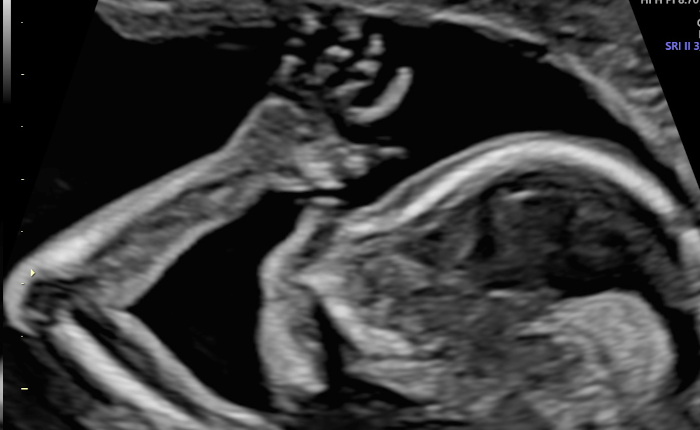
Regular ultrasound checks to assess the child’s growth, organ development, position and blood circulation.
Further examinations during pregnancy
Non-invasive prenatal test (NIPT)
NIPT is a blood test from the 10th to 12th week of pregnancy to detect certain chromosomal abnormalities based on the child’s DNA in the mother’s blood.
Among other things, it examines
-
Trisomy 21 (Down syndrome) – approx. 99 % sensitivity
-
Trisomy 18 (Edwards’ syndrome) – approx. 97-99 %
-
Trisomy 13 (Pätau syndrome) – approx. 90-95 %
-
Sex chromosomes
The NIPT is a screening test. Abnormal results must be investigated further. The costs are usually covered by health insurance.
First trimester screening (11-13 weeks gestation)
First trimester screening combines high-resolution ultrasound and blood tests for individual risk assessment for chromosomal disorders and early malformations.
Ultrasound:
Blood test:
These parameters are used to calculate an individual risk and create a sound basis for decision-making.
Pre-eclampsia screening
Pre-eclampsia affects around 2-5% of all pregnant women and can have serious consequences. Screening is carried out according to the FMF algorithm and includes:
-
Blood pressure measurement
-
Doppler ultrasound
-
Laboratory parameters (PAPP-A, PlGF)
-
Recording individual risk factors
If there is an increased risk, preventive therapy with ASA can be initiated at an early stage.
Pregnancy cholestasis (ICP)
Intrahepatic pregnancy cholestasis is a rare liver disease that usually occurs in the third trimester. Typical symptoms are itching and increased bile acids. Early diagnosis enables close monitoring and targeted therapy.
CMV & toxoplasmosis during pregnancy
Toxoplasmosis
An initial infection during pregnancy can have serious consequences for the child. Blood tests can be used to assess the individual risk and treat it if necessary.
Cytomegalovirus (CMV)
CMV is a common viral infection that is usually asymptomatic. Testing at the beginning of pregnancy is advisable, especially if there is a lack of immune protection.
GBS screening (B streptococci)
A smear test for group B streptococci is recommended between the 35th and 37th week of pregnancy. If the result is positive, antibiotic prophylaxis is given during the birth to protect the newborn.
We will guide you through your pregnancy competently, individually and in line with the latest developments in prenatal medicine.
You are welcome to make an appointment at our specialist practice for pregnancy care and prenatal diagnostics in Hamburg.


 Deutsch
 English
 Polski
 Albanian
 Italiano
 Español
 Français
 Українська